
Call us now :08045803206
 Send Inquiry
 Send Inquiry
Industrial Rebar Threading Machine
Price 00 INR/ Unit
MOQ : 1 Unit
Industrial Rebar Threading Machine Specification
- Drive Motor
- 4 kW Electric Motor
- Product Type
- Industrial Machinery
- General Use
- Threading of Rebar/Steel Rods
- Material
- Alloy Steel Body
- Type
- Rebar Threading Machine
- Capacity
- 40 mm Max Threading Capacity
- Weight (kg)
- Approximately 370 kg
- Computerized
- No
- Automatic
- No
- Cutting Thickness
- Up to 40 mm Rebar
- Cutting Function
- Thread Cutting on Steel Bars
- Cooling System
- Integrated Coolant Pump
- Drive Type
- Gear Driven
- Voltage
- 415 V AC, 50 Hz
- Dimension (L*W*H)
- 1100 x 600 x 900 mm
- Feature
- High Durability, Easy Operation, Portable Design, Stable Performance
- Color
- Blue/Yellow
- Motor
- 4 kW, 3 Phase Electric Motor
- Mechanical Precision
- High Thread Accuracy
- Cutting Method
- Cold Threading
- Control System
- Manual
- Cutting Material
- Steel Rebars
- Die Head Type
- Interchangeable Die Head
- Threading Length
- Adjustable, Up To 110 mm
- Working Noise Level
- Less than 80 dB
- Application
- Construction, Civil Engineering, Infrastructure Projects
- Minimum Rebar Diameter
- 16 mm
- Lubrication
- Automatic Lubrication System
- Mobility
- Provided with Wheels for Easy Transport
- Power Consumption
- 4 kW
Industrial Rebar Threading Machine Trade Information
- Minimum Order Quantity
- 1 Unit
- Payment Terms
- Cheque
- Supply Ability
- Unit
- Packaging Details
- As per Requirement
- Main Export Market(s)
- Australia, Eastern Europe, Western Europe, Africa, Central America, Middle East, South America, Asia, North America
- Main Domestic Market
- All India
About Industrial Rebar Threading Machine
Our company supplies a wide assortment of Rebar Threading Machines as per the requirement of the clients. These threading machines, widely used in various industrial applications, are preferred for their better service life and high tensile strength. They are convenient to install and require low maintenance cost.
|
Model |
1/4" TO 1" |
3/8" to 1.1/2" |
1/2" TO 2. 1/2" |
4"TO 8" |
|
Saddle Movement |
10" |
10"- 12" |
12"_ 16" |
10"_ 12" |
|
Spindle Speed Range |
60-90 |
60-90 |
60-90-120 |
25 - 50 |
|
Number of Spindle Speed |
2 |
2 |
3 |
2 |
|
Threading Capacity |
1/4"TO 1" |
3/8" to 1.1/2" |
1/2"TO 2. 1/2" |
4"TO 8" |
|
Production per Hour |
60-80 |
60-80 |
70-90 |
15-20 |
|
H.P. Required |
3 H.P. |
3 H.P. |
7.5 H.P. |
20 H.P. 960 |
|
Lead Screw |
OPTIONAL |
OPTIONAL |
OPTIONAL |
PROVIDED |
|
Weight (KG) Aprox. |
500 |
550 |
990 |
2500 |
Advanced Rebar Threading Capabilities
This machine provides high-precision thread cutting on steel rebars, accommodating diameters from 16 mm to 40 mm. The cold threading method ensures minimal material distortion, while the integrated coolant pump prolongs tool life and maintains thread quality. Its robust drive and automatic lubrication further enhance operational consistency.
Designed for Efficiency and Mobility
Constructed from durable alloy steel, the machine features a portable design with integrated wheels, enabling effortless transportation across job sites. Its simple manual control system streamlines operation, making it accessible for operators with different experience levels. This maximizes uptime and reduces setup time during construction projects.
Optimized for Construction Excellence
Engineered specifically for construction and infrastructure environments, the machine delivers stable performance even under prolonged workloads. The interchangeable die head system allows rapid adaptation to various threading requirements, promoting versatility in large-scale projects and helping users meet stringent deadlines efficiently.
FAQs of Industrial Rebar Threading Machine:
Q: How does the automatic lubrication system work in the rebar threading machine?
A: The machine utilizes an automatic lubrication system that continuously supplies oil to critical moving parts during operation, reducing friction, enhancing wear resistance, and extending the lifespan of both the die head and other components.Q: What is the process for threading rebar with this industrial machine?
A: To thread rebar, simply insert the steel rod (16 mm to 40 mm in diameter) into the machine, select the appropriate interchangeable die head, and operate the manual controls. The gear-driven system and 4 kW motor will power the threading process efficiently, while the integrated coolant and lubrication systems help maintain thread precision.Q: When should the die head be replaced or changed?
A: The interchangeable die head should be changed whenever you require a different thread size or after noticeable wear occurs, which can be detected by diminished thread quality or increased resistance during cutting. Regular inspection is recommended to ensure consistent performance.Q: Where can this rebar threading machine be used most effectively?
A: This machine is ideal for use in construction sites, civil engineering works, and infrastructure projects where precise and durable threaded rebar connections are essential. Its mobility and rugged design allow it to perform reliably in challenging environments.Q: What are the benefits of using this machine over traditional threading methods?
A: The machine delivers high thread accuracy, fast processing times, and enhanced operator safety due to features like automatic lubrication, integrated coolant, and stable gear-driven performance. Its portability and adjustable threading capability make it a versatile and efficient solution for demanding projects.Q: How easy is it to transport and operate the machine on site?
A: With integrated heavy-duty wheels and a compact design, the machine is easily movable across job sites. Operation is straightforward via manual controls, making it accessible for operators without specialized computerized training.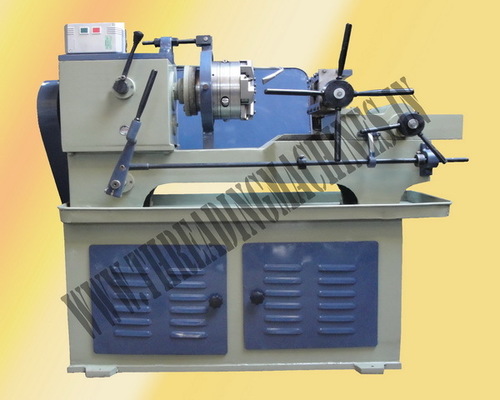
Tell us about your requirement

Price:
Quantity
Select Unit
- 50
- 100
- 200
- 250
- 500
- 1000+
Additional detail
Mobile number
Email


We are interested in receiving only Export inquiries.
Our Export Percentage is 100 %.
 Send Inquiry
Our Products

Plot No - 273 Alamgir Village, Malerkotla Road,Ludhiana - 141002, Punjab, India

Mr. Davinderjit
(Proprietor)
Mobile :08045803206
 Send Inquiry
 Send SMS
Developed and Managed by Infocom Network Private Limited.
